19 Oct 2026
Charting Sequential Milestones That Define Expedition Planning Cycles
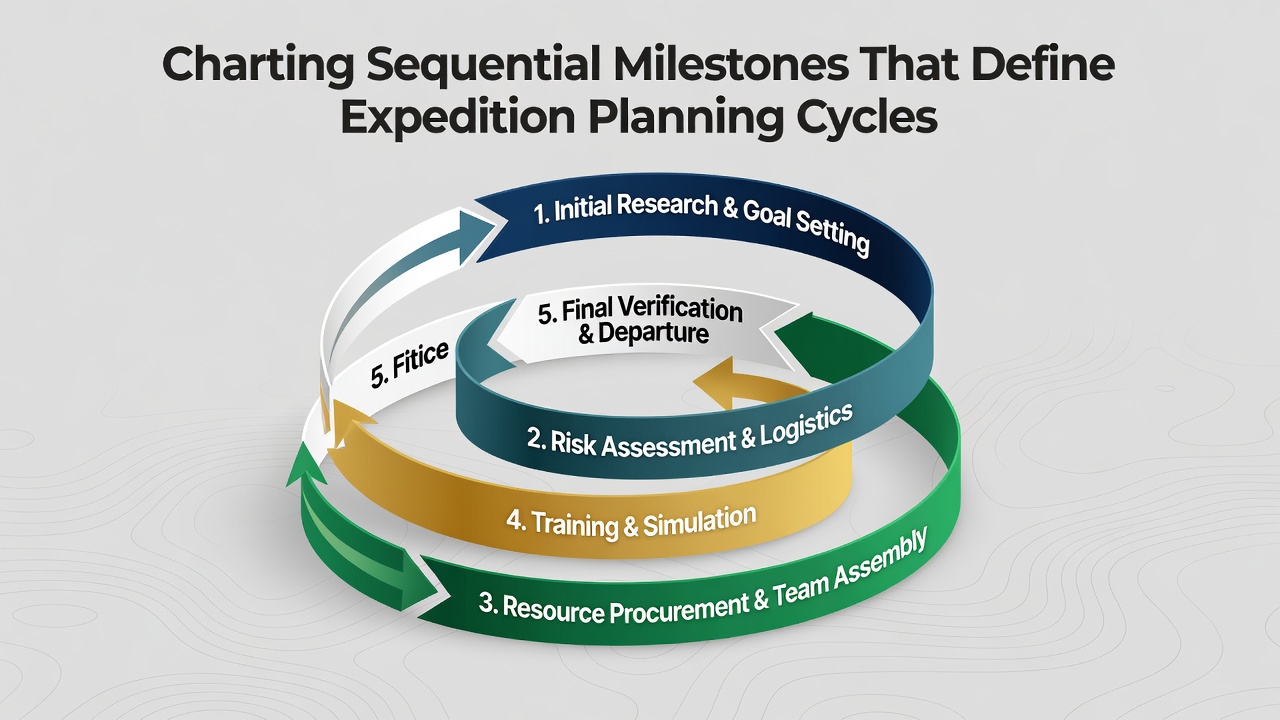
Expedition planning cycles follow a structured sequence of milestones that guide teams from initial concept through completion and review, and observers note that these steps help coordinate logistics across remote environments where conditions change rapidly. Data from outdoor organizations shows that successful expeditions often align their timelines around seasonal windows, with many groups targeting departures in periods like October 2026 to match favorable weather patterns in various regions.
Defining the Cycle Framework
Researchers have identified core phases that repeat across different expedition types, beginning with objective definition and extending through post-activity analysis, while each phase builds on the previous one to reduce oversights in resource allocation and safety protocols. Studies from academic institutions indicate that breaking the process into sequential milestones allows planners to track progress against measurable targets, such as securing permits or completing training modules, rather than relying on vague timelines.
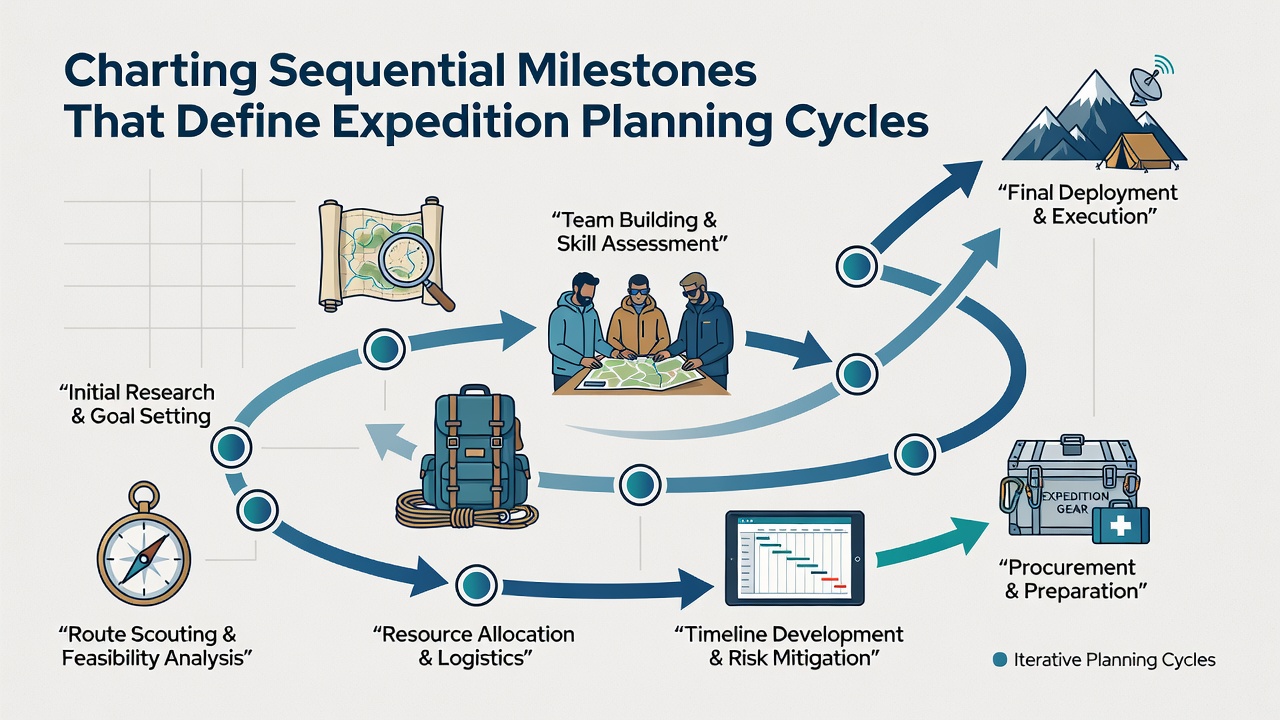
One milestone involves preliminary research where teams compile environmental data, historical route information, and regulatory requirements, and this stage often incorporates input from local authorities to establish baseline constraints before deeper commitments occur. According to reports from Parks Canada, expeditions in northern territories must account for protected area rules early to avoid delays in approval processes that can extend several months.
Route Selection and Logistics Mapping
After research concludes, planners shift focus to route selection where they evaluate terrain difficulty, elevation profiles, and supply point locations, and this step integrates mapping software with field observations to create contingency options for weather disruptions or equipment failures. Data indicates that groups using layered digital and paper maps experience fewer navigation issues during execution phases.
Logistics mapping follows as the next sequential milestone, encompassing transportation schedules, food caches, and communication protocols, while teams coordinate with suppliers to align delivery dates with departure windows. What's interesting is how this phase connects directly to budget tracking, since cost fluctuations in fuel or permits can force adjustments to the overall cycle timeline.
Regulatory Compliance and Risk Evaluation
Permits and compliance represent a critical milestone that often overlaps with risk evaluation, and authorities in regions like Australia require detailed environmental impact assessments before granting access to sensitive sites. Figures from government agencies reveal that incomplete applications account for a significant portion of planning delays, prompting teams to allocate dedicated time for documentation reviews.
Risk evaluation builds on compliance data by modeling potential hazards such as avalanches or medical emergencies, and planners incorporate medical training requirements alongside evacuation strategies to meet insurance standards. But here's the thing: this milestone demands ongoing updates because new information from weather services can alter risk profiles right up to the departure date.
Preparation Milestones and Execution
Training and equipment procurement form parallel milestones that feed into final readiness checks, where teams verify physical conditioning against route demands and test gear under simulated conditions, and organizations like the American Alpine Club provide resources that help standardize these preparations across different skill levels. Evidence suggests that integrated training schedules improve team cohesion during high-stress segments of an expedition.
The execution phase activates once all prior milestones clear, with real-time monitoring systems tracking progress against planned checkpoints, and adjustments occur through predefined communication trees that keep support networks informed. Data shows that expeditions maintaining daily logs during this stage generate valuable records for later analysis.
Post-Expedition Review
Review and documentation close the cycle by compiling lessons from each milestone, and this step feeds directly into planning for subsequent expeditions by updating databases with new observations on routes or equipment performance. Researchers have observed that structured debriefs help identify patterns in delays or successes that might otherwise go unnoticed.
Conclusion
Sequential milestones in expedition planning cycles provide a repeatable structure that coordinates complex variables across extended timelines, and organizations continue to refine these frameworks based on accumulated field data from multiple regions. Integration of tools and regulatory inputs helps maintain alignment from initial research through final review, supporting safer and more efficient outcomes in dynamic outdoor settings.