19 Oct 2026
Charting Participant Pathways Through Structured Wilderness Programs
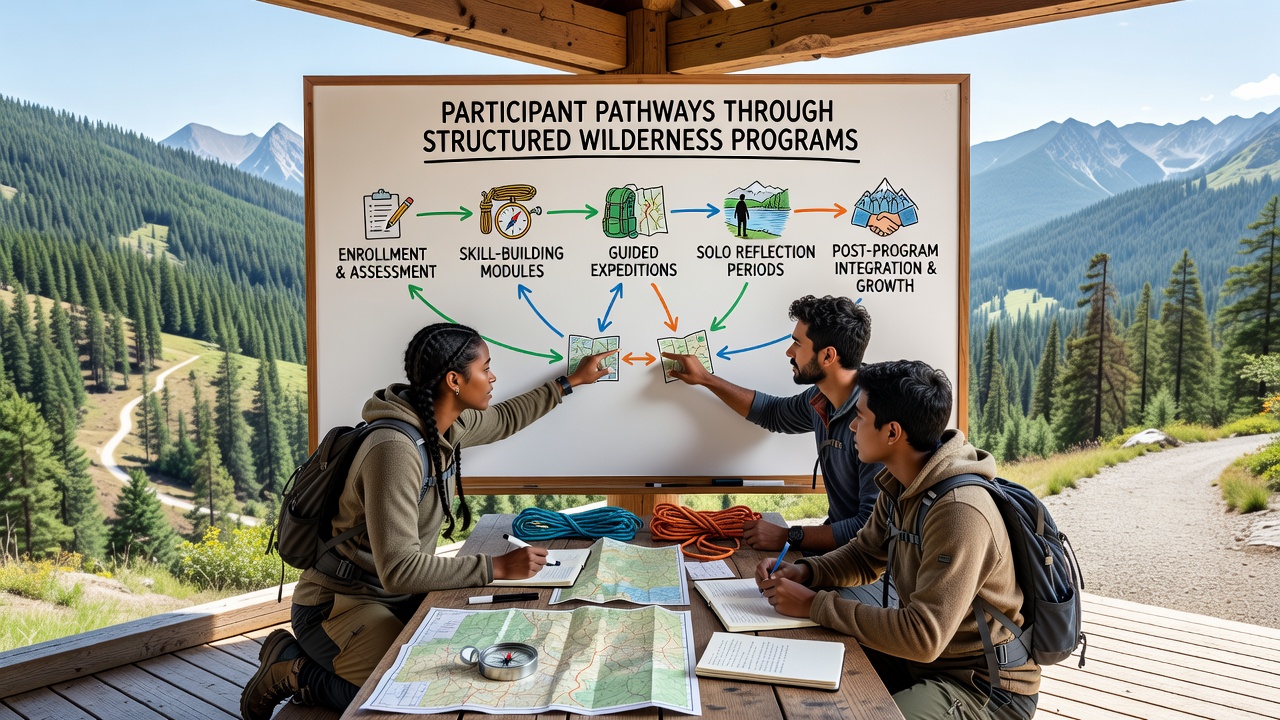
Structured wilderness programs guide participants through sequenced experiences in remote natural settings, and observers track these movements to understand progression patterns. Data collection begins at intake when staff record baseline health metrics, prior outdoor experience levels, and personal goals, then continues through each phase of the program cycle. Researchers document transitions from initial skill-building exercises to advanced group challenges, noting how individuals adapt to environmental demands over days or weeks.
Defining Core Components of These Programs
Programs typically combine physical activities such as navigation training and shelter construction with reflective sessions that encourage personal assessment. Staff maintain logs of daily participation rates while participants complete self-report forms at set intervals, and this dual approach generates datasets that reveal common sequences. Evidence from multiple sites shows that most participants move through an acclimation period lasting three to five days before tackling more complex tasks, although individual timelines vary based on group dynamics and weather conditions.
Tracking Methods and Data Sources
Modern charting relies on digital tools including GPS-enabled journals and wearable sensors that capture movement patterns alongside heart rate variability during activities. Program coordinators integrate these inputs with qualitative notes from guides who observe social interactions and decision-making moments. A longitudinal project coordinated across North American sites collects comparable records from over 2,000 participants annually, allowing analysts to identify recurring pathways such as rapid skill acquisition followed by leadership emergence. In October 2026 the project team plans to release an updated public dataset covering five years of records, expanding opportunities for cross-regional comparisons.
Stages Observed in Participant Progress
Entry stages focus on safety briefings and equipment familiarization, after which groups advance to route-planning exercises that require collaborative input. Mid-program phases introduce solo reflection periods and multi-day treks where participants apply accumulated skills under reduced supervision. Final segments emphasize transfer planning, during which individuals outline how they intend to maintain new habits once they return to regular environments. Records indicate that approximately 78 percent of participants complete all scheduled stages without modification, while others receive adjusted timelines due to health or weather factors.
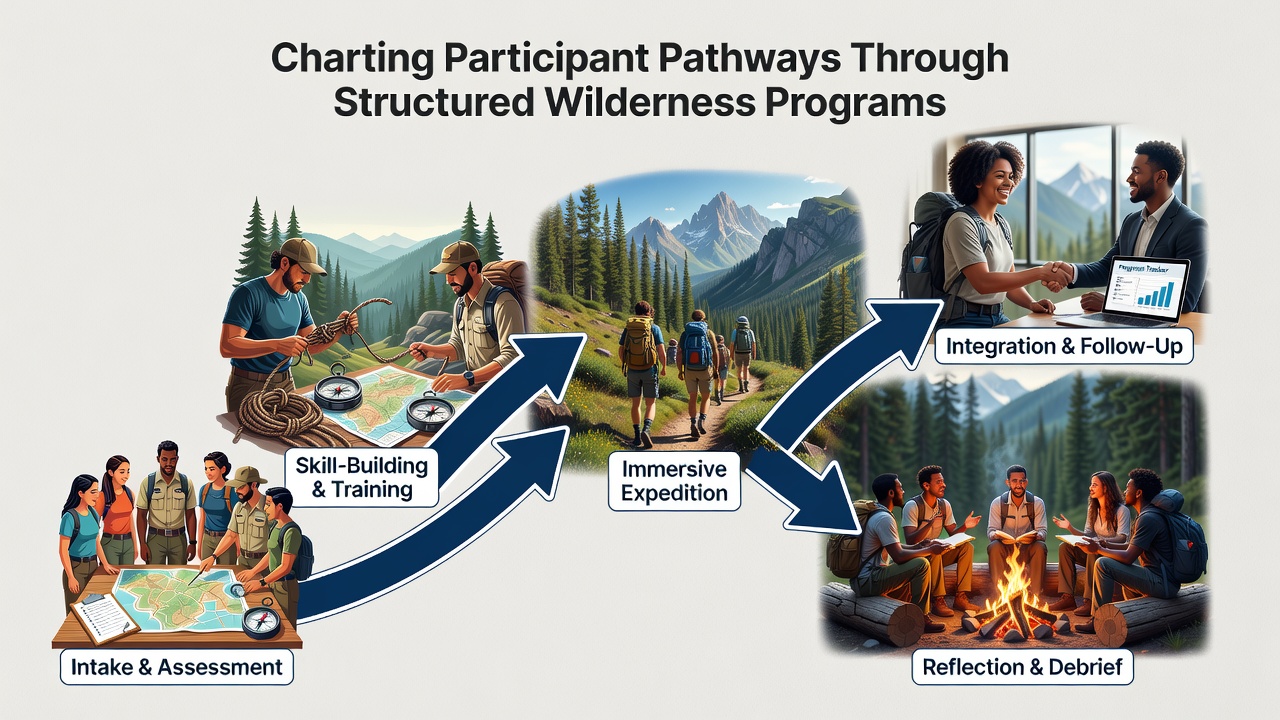
Geographic location influences pathway length because programs in mountainous terrain often allocate extra days for altitude adjustment compared with coastal or forested sites. According to information published by the U.S. Forest Service, permit requirements and seasonal restrictions further shape scheduling decisions that affect how cohorts move through curricula.
Role of Assessment Tools in Pathway Documentation
Standardized rubrics evaluate competencies in areas such as risk management and interpersonal communication at multiple checkpoints. Facilitators score these areas on consistent scales, then aggregate scores to generate visual pathway maps that highlight acceleration or plateaus. One study conducted by researchers at the University of Alberta examined 450 participants across three seasons and found that those who received targeted coaching during the first week showed steeper improvement curves in later stages. Such findings support refinements in how programs sequence feedback sessions.
Comparative Analysis Across Regions
Programs operating in Australia incorporate indigenous land-management perspectives into their curricula, which alters the sequence of cultural education modules relative to purely skill-focused models used elsewhere. European operators, particularly those in Norway and Sweden, emphasize seasonal immersion that extends program duration during winter months. Data compiled by the Australian Government Department of Climate Change, Energy, the Environment and Water indicates that cross-cultural elements correlate with higher reported retention of environmental stewardship practices six months after program completion.
Challenges in Maintaining Accurate Records
Remote settings limit real-time data transmission, prompting many programs to rely on offline storage devices that sync upon return to base facilities. Staff turnover can interrupt continuity in observation protocols, yet standardized training modules mitigate this issue by ensuring new personnel apply identical recording criteria. Privacy regulations require anonymization of individual records before datasets enter public repositories, and this step adds processing time but preserves participant confidentiality.
Conclusion
Charting participant pathways provides structured wilderness programs with measurable indicators of progression and outcome alignment. Continued refinement of tracking tools and expanded multi-site collaborations promise richer datasets, especially once the October 2026 release becomes available for broader analysis. These records help administrators adjust curricula and allocate resources more precisely while maintaining focus on participant safety and development.